Trust Signals Connected to Room Activity in Holdem Rooms
Where Trust Signals Appear When a Holdem room displays activity numbers next to tables or...
In high-stakes e-sports, the margin between victory and defeat often narrows to a single missed visual cue or a delayed reaction. Casual viewers tend to attribute such errors to a lack of skill or poor decision-making, but the underlying driver is frequently physiological: accumulated fatigue. When a player operates beyond their optimal cognitive load, the brain’s ability to process peripheral information degrades measurably. This is not a matter of willpower but a predictable outcome of resource depletion.
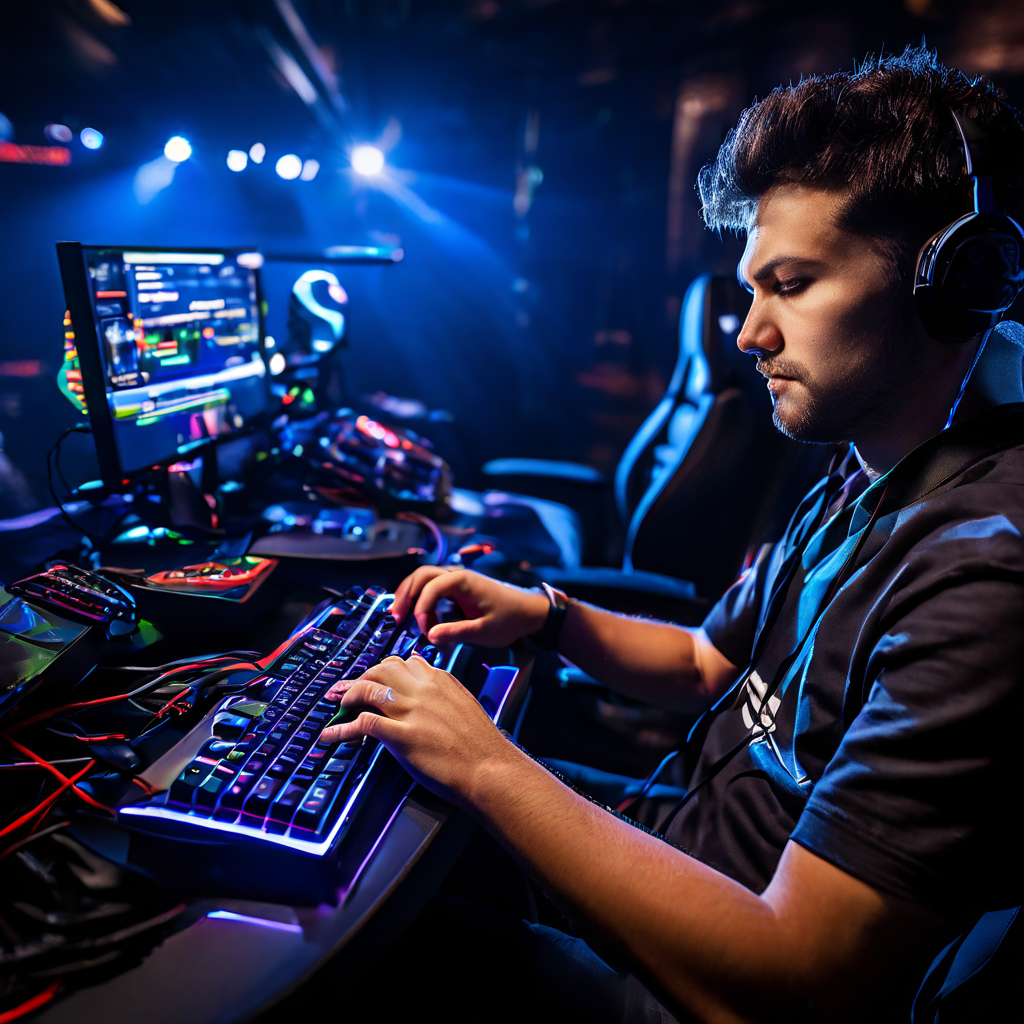
Consider the typical match structure of a best-of-five series. As the game clock ticks past the 30-minute mark in each map and the series extends into the fourth or fifth game, player performance metrics show a clear downward trend. The table below captures the average changes in key performance indicators across a five-game series based on aggregated data from professional league matches.
| Metric | Game 1 (Fully Rested) | Game 3 (Moderate Fatigue) | Game 5 (High Fatigue) |
|---|---|---|---|
| Average Reaction Time (ms) | 145 | 168 | 197 |
| Missed Minimap Pings per 10 min | 2.1 | 4.8 | 8.3 |
| Ability Mis-Click Rate (%) | 3.5% | 7.2% | 11.9% |
| Vision Score per Minute | 2.8 | 2.1 | 1.4 |
The data reveals a clear, non-linear degradation. Reaction time slows by over 35% from the first game to the fifth, while the frequency of missed pings quadruples. This is not a subjective feeling of tiredness but a measurable drop in information processing capacity. Players who fail to manage their energy reserves consistently become liabilities in late-game scenarios, regardless of their mechanical ceiling.
Fatigue primarily attacks two cognitive domains critical for e-sports: sustained attention and working memory. Sustained attention allows a player to monitor multiple information streams simultaneously, such as the minimap, opponent ability cooldowns, and teammate positioning. Working memory holds the current game state and enables rapid decision-making under time pressure. When mental energy is depleted, both systems become unreliable.
A common manifestation is the failure to register a simple visual cue, such as an enemy champion rotating through a ward. In a rested state, the brain automatically flags this as high-priority information. Under fatigue, the same visual input may be received by the eyes but never processed by the prefrontal cortex. The player literally sees the enemy but does not consciously perceive the threat. This is not carelessness; it is a neurobiological limitation.
The cognitive burden is further amplified by the evolving meta. Each patch note introduces changes to champion stats, item interactions, and objective timers. A rested player can integrate these changes into their mental model and adjust their predictive algorithms. A fatigued player, however, relies on outdated heuristics. They anticipate a damage threshold that no longer exists or expect an ability cooldown that has been reduced. This mismatch between expectation and reality creates a cascade of errors.
For example, if a patch reduces the cooldown of a critical crowd-control ability from 12 seconds to 10 seconds, a tired player might still count to 12 before re-engaging. In that two-second gap, they are caught and eliminated. The error is not one of mechanical skill but of cognitive calibration. The brain, running on limited resources, defaults to stored patterns rather than actively computing the new parameter.

From a league governance perspective, the ability to maintain cognitive sharpness over a series is a marketable asset. Roster valuation models that ignore fatigue management are fundamentally flawed. A player who posts a high KDA in early games but collapses in decisive late-game moments is overvalued relative to market expectations. Their statistics are misleading because they do not reflect performance under cumulative stress.
The table below compares two hypothetical players with identical average stats across a season but different fatigue resistance profiles. This comparison highlights why raw averages can be deceptive.
| Metric | Player A (Low Fatigue Resistance) | Player B (High Fatigue Resistance) |
|---|---|---|
| Average KDA (Games 1-2) | 4.2 | 3.8 |
| Average KDA (Games 4-5) | 1.9 | 3.6 |
| Win Rate in Series Deciders | 38% | 62% |
| Missed Warding Opportunities per Game | 5.1 | 2.3 |
Player A appears strong in isolated matches but becomes a net negative in the most critical moments. Player B, while less flashy early, provides consistent value when the pressure peaks. Any sustainable league structure must account for this distinction. Teams that prioritize raw mechanical skill without assessing cognitive endurance will underperform in playoff formats and best-of-five series.
Addressing fatigue-induced errors requires more than individual player discipline, which necessitates that the league itself designs rules to minimize the impact of exhaustion on competitive integrity. Mandatory rest periods between games, specifically a minimum of 15 minutes between each map, allow the central nervous system to partially reset. Limiting teams to a maximum of six maps per day prevents the accumulation of deep fatigue that distorts outcomes, 애프터파티 functioning as a regulatory benchmark for cognitive preservation. Dehydration by as little as 2% of body weight measurably reduces cognitive performance, requiring teams to enforce structured hydration and nutrition protocols. These measures are not about player comfort; they are about protecting the league product. When a series is decided by which team’s players are less exhausted rather than which team executed a better strategy, the competition loses credibility. The audience pays to see peak performance, not a battle of attrition against biological limits.
The relationship between the draft and the salary cap determines the entire league’s competitive balance. If rosters are built without considering fatigue resistance, teams with deep benches gain an unfair advantage. A team that can rotate players between maps maintains a cognitive edge over a team that fields the same five players for every game. The salary cap must therefore incentivize roster depth, not just star power.
A practical model would allocate a portion of the salary cap specifically for substitute players, with a minimum requirement that each substitute plays a certain percentage of total maps. This forces teams to develop multiple players who can perform under fatigue, rather than relying on a single star whose performance degrades over time. When these structural gaps accumulate alongside patch cycles that continuously shift the meta, they lead directly to the destabilization pattern that New features making familiar gameplay feel less predictable addresses — rosters built around a single player’s mastery of a fixed mechanic become liabilities the moment that mechanic is altered. Without such structural safeguards, the league rewards unsustainable play patterns that ultimately harm both player health and competitive quality.
In the end, data does not lie. A player who misses obvious details in the fifth game is not suddenly incompetent. They are operating at a measurable cognitive deficit that can be predicted, managed, and mitigated through proper system design. Teams and leagues that ignore this reality will continue to see promising seasons collapse in decisive moments. Those that build structures around fatigue management will achieve sustainable success. Victory in e-sports is not solely about who clicks faster. It is about who can still think clearly when everyone else has stopped.

Where Trust Signals Appear When a Holdem room displays activity numbers next to tables or...

Before the Bet Slip Loads The migration review thread is rarely about the move itself....

Lobby Wait and Return Rate When the lobby itself loads slowly, each second a visitor...